Annual average temperatures are increasing
2025 was the UK's warmest year since records began in 1884. The UK was 1.3°C warmer on average between 2016-2025 compared to the historical baseline of 1961-1990.
Our climate is changing and it is already affecting our everyday lives.
Across the UK and Ireland, heatwaves, droughts, fires and floods are becoming more frequent. This puts not only our educational infrastructure and operations at risk, but also the health and wellbeing of staff and students.
Post-16 education institutions must adapt to a changing climate and ensure that risks are appropriately managed and reduced.
Climate risk refers to the potential negative consequences for human or ecological systems from the impacts of climate change.
Climate risk is the result of interactions between a hazard, exposure and vulnerability. For example, a storm (the hazard) hits your local area (exposure). Due to inadequate drainage capacity (vulnerability), your institution experiences surface water flooding.
Climate adaptation refers to actions that manage and reduce the negative impacts of climate change by reducing vulnerability.
For example, if your institution is vulnerable to surface water flooding, you could install rainwater storage systems like tanks and rainwater gardens. These can reduce the speed of rainwater entering the drainage system to prevent the system overflowing.
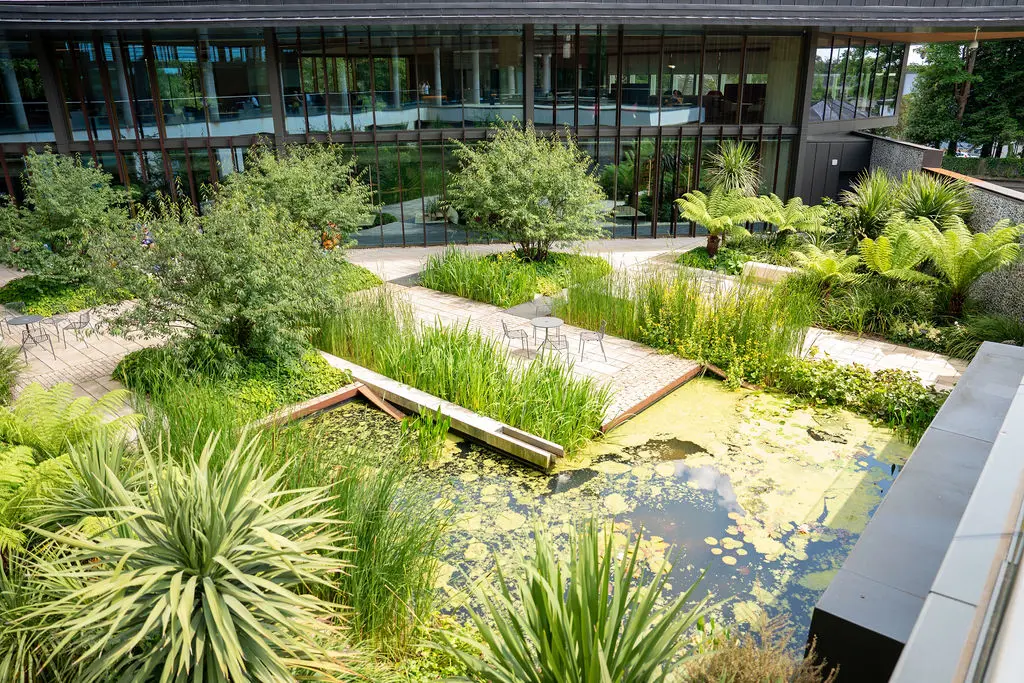
 The charred remains of the August 2025 wildfire on Arthur’s Seat visible behind the University of Edinburgh’s Pollock Halls. EAUC / Lara Fahey.
Compared to historical baselines, the UK and Ireland have already begun to experience warmer and wetter winters, hotter and drier summers, and more frequent and intense weather extremes. The figures below are all taken from the Met Office State of the UK Climate 2025 report.
2025 was the UK's warmest year since records began in 1884. The UK was 1.3°C warmer on average between 2016-2025 compared to the historical baseline of 1961-1990.

Days over 30°C and nights over 18°C have more than quadrupled for Greater London. Across large parts of England, the average hottest day of the year is now 3°C warmer. Hot days and nights make it harder to sleep and concentrate, affecting staff and student health, wellbeing and performance.

The cooler months from October to March were 13% wetter between 2016 and 2025. More intense rainfall increases the likelihood of water ingress into buildings and surface water flooding, which can result in costly building repairs and disruption to teaching and learning.

Sea levels around the UK have risen by about 20cm since 1901. Most of this rise has happened over the last three decades. Institutions in coastal areas may be at higher risk of land erosion and flooding, especially during storms.

Even if we stopped emitting greenhouse gases today, we would still experience climate change. The gases that we have already released will continue to warm our planet for years to come. Forecasts for the UK and Ireland expect there to be a further intensification of recent trends.
The changing climate poses a significant threat to the functioning of post-16 educational institutions. There are potential impacts for delivery of quality learning, teaching and research, student recruitment, health and wellbeing, supply chains, insurance premiums and the profitability of investments.
Your institution should:
View the changing climate as a core strategic risk
Take proactive steps to improve organisational understanding of climate risk and how it could holistically impact the organisation
Take adaptation action to reduce climate risk and realise potential opportunities that arise from taking action
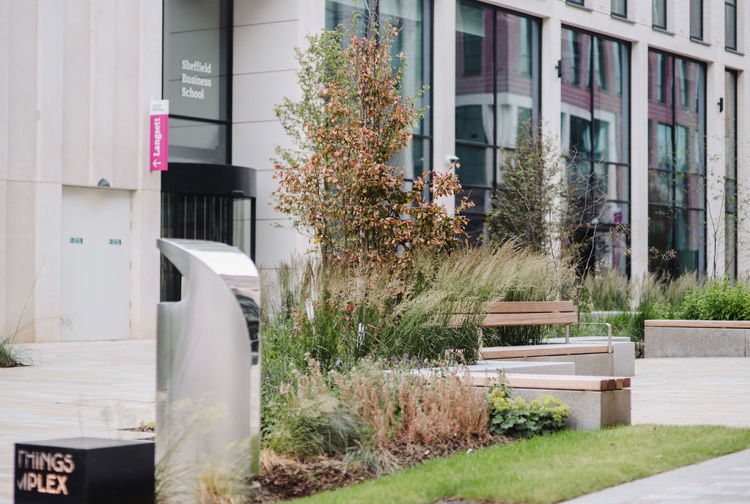 Biodiverse planting at Sheffield Hallam University can reduce flooding, provide food for pollinators and cool the surrounding area. EAUC / Becky Payne.
Rapidly review where the institution is at using Sustainable Scotland Network’s Leaders’ Climate Adaptation Checklist.
Build internal understanding of climate risk and adaptation using Adaptation Scotland’s Public Sector Starter Pack and EAUC’s climate risk communications pack. Continue learning and sharing effective practice by joining EAUC’s community of practice on managing climate risk and Adaptation Scotland’s Public Sector Climate Adaptation Network (Scottish organisations only).
Ensure that staff leads from across all organisational departments are involved in training as this will help improve the robustness of climate risk registers and adaptation action.
Complete an organisational climate risk register for current and future climate risk, using EAUC’s climate risk register guide and tool and climate risk profiles for Scottish college and university campuses (Scottish organisations only) or Met Office’s Explore the Climate of Your Local Authority (UK organisations only).
Complete a more thorough climate risk and adaptation benchmarking review using Adaptation Scotland’s Public Sector Climate Adaptation Benchmarking Tool.
Based on the results of climate risk register and the benchmarking exercises, develop and implement an adaptation plan using AUDE’s Climate Change Adaptation and Resilience Guide and Adaptation Scotland resources for inspiration. Ensure there are clear targets and KPIs in place.
Monitor and evaluate climate resilience action annually, supported by the above checklist and benchmarking tool, with changes to risk registers and action plans made as needed.
"Specific climate adaptation measures taken include installation of a rainwater harvesting system for our new Climate Engagement Learning Garden, factoring in insulations and thermal comfort into our new cladding project, and relocating ICT servers and equipment vulnerable to flooding."
"One of our key learnings is that climate adaptation should not be viewed solely as an estates or sustainability issue. The most valuable discussions and outcomes come from involving colleagues from a wide range of departments, including governance, curriculum, facilities management, business continuity and strategic planning."
"The last few years have seen our spring and summer months getting warmer which has impacted on teaching indoors... In light of this impacting directly on college curriculum delivery, resolutions are now critical and future infrastructure work will require consideration to implementing air cooling systems, improve ventilation and our outdoor teaching spaces."
Share your experiences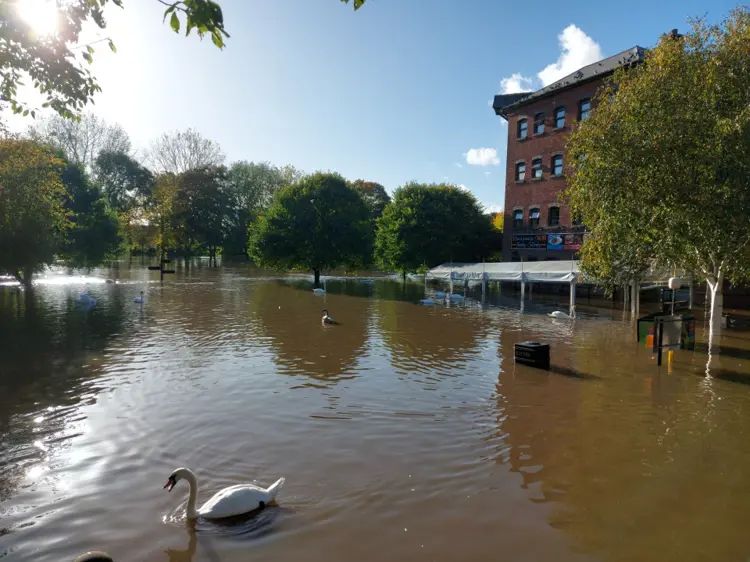 Storm Babet caused flash flooding in Worcester in October 2023. EAUC / Claire Mitchell.
Do you need support to use our tools and resources? Do you have questions about climate risk and improving resilience at your post-16 education organisation?
Get in touchJoin our community of practice for managing climate risk.
Find out more